• Between the Hedges

    Layers of green blanket the West Dorset countryside. Jenna Nienhuis explores the perception versus reality of a visitor in this bewildering landscape. 

    I reach my hand out the passenger side window as our minivan weaves down the country road, grasping for strands of overgrown hedges as we pass. A rewilding mandate is great for the earth but not for foreign drivers. My husband and I gladly accept our penance in service of the earth; though my breath remains inward around every corner, eyes squinting for a truck or tractor barreling down the dirt path not much wider than a bicycle lane. Will they or won’t they? 

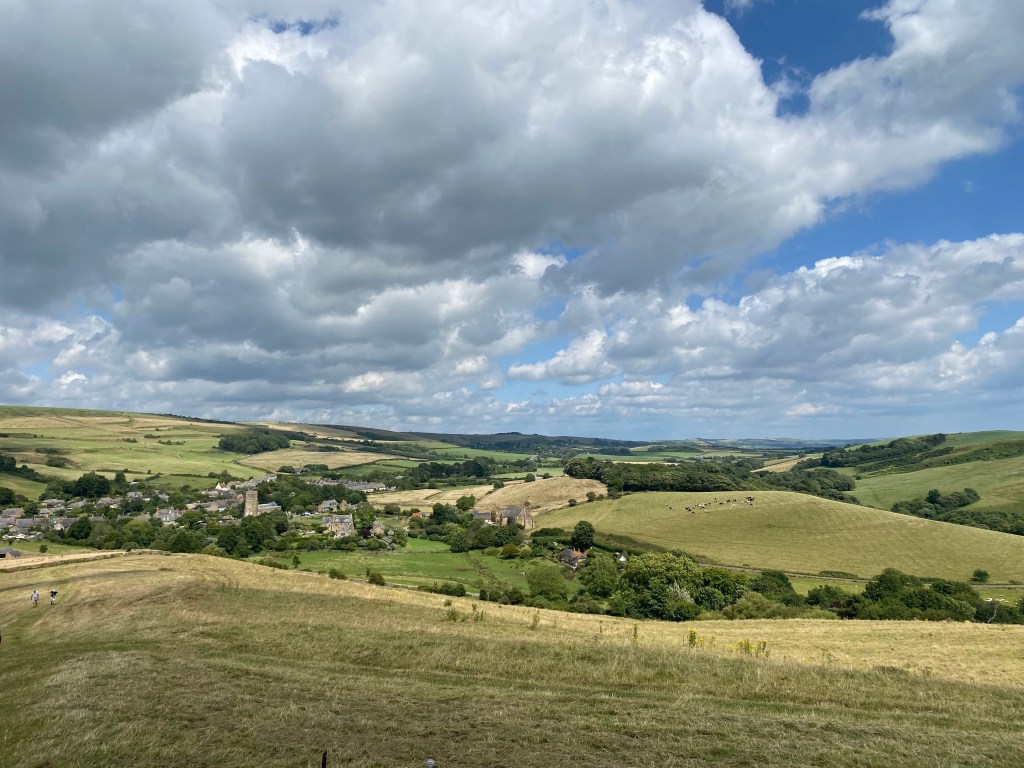
    Around this place, all I see is green. Romantic views of pastures unfold in every emerald hue split by hedges and groves of sycamores. Deep green moss and minty lichen blanket ancient oaks, and ferns burst from the earth. 

    We arrive safely, and I turn to say goodbye to my three daughters, who are perched in the backseat, still in their pajamas and wearing morning faces topped with unruly bedheads. 

    “Bye bye Mommy,” they say through a yawn, off for an adventure day with Dad.  I feel a bittersweet ache mixed with excitement at being the one going off to work, a change from my usual role as the primary caregiver. I hope they miss me. 

    My fellow nature writers and I gather for fieldwork, setting out to explore the trails of Kingcombe Nature Reserve. It’s summer, but yesterday’s downpour made me question the season’s hope of sunshine. I am out of my California element, and my white active-shoes make that abundantly clear. 

    My feet wobble on the tops and sides of small boulders along a seasonally wet river bed. I spot a large tree trunk with several smaller branches coiled around it like veins as if the tree had flipped inside out. Two dead blackbirds from my walk yesterday flash into my mind.  I thought they might be bad luck until a grasshopper landed on the cuff of my sweater and stayed for all of lunch. 

    Now knee-deep in a meadow, my mind and I wander through puffs of purple wildflowers, yellow buttercups, and the occasional meadow brown making a dandelion wish. Cows carry on in the background, while the buzzing hind legs of grasshoppers take the moment. Mine mostly just itch. 

    Thick wigs of matte green meadow grass cover badger holes, cover everything, and I wonder if I might fall into one like Alice in Wonderland. My oldest daughter wrote a story this past winter called “Rain Rain and More Rain” about a girl who jumped into a puddle and traveled to another world. I wonder if this is where she landed. Kingcombe seems like a wondrous stop on the other side of a puddle. 

    “Few butterflies this year,” everyone agreed as we struggled to observe a variety of insects. One student mentioned the grassroots efforts of “No Mo May.”  Another story headlined the conversation about neighbors coming together to save a tiny patch of grass near their sidewalk. Thousand-acre farming estates are returning portions of their land to nature and transitioning to sustainable farming practices. Even our hobby-farm Airbnb host noted the thistle growing extra tall this year from all the rain and restoration efforts on their property.  

    These encounters, facts, and citizen efforts disagree with an outsider’s lens of this dense, wild landscape. Beneath the plentiful green is a deeper issue of biodiversity. Treated farmland is not equal to an untouched wildflower meadow or the depth of a wild forest. West Dorset’s wildlife has declined substantially over the last few decades, including butterfly species and bee populations by 20%.  It’s tempting to be captivated by beauty and overlook the deeper truths beneath the surface; in Dorset, or wherever one ventures. 

    A green landscape is often mistaken for uniformity and vitality; some artists even dismiss the color as “boring.” But up close, there is dimension and depth to green, shades of truth hidden in the grasses and between the hedges. 

    I lay in bed that night and scrolled through photos of the day, the first of our trip to England. Amidst several images of cows, I spotted the coveted English countryside photo. Google would say I have arrived. 

    West Dorset as a traveler is a mixed reality experience, grids and layers of complex green. The heartache of habitat lost and vanishing wildlife contrasts with the area’s captivating beauty and the community’s commitment to let nature take the lead, restoring the missing shades of this enchanting landscape. 

  • Mother / Daughter Nature

    We arrive at San Elijo Lagoon, leaving the Sunday Scarries back at home to wallow. This coastal estuary hosts a new act of wonder minute by minute upon the wetland stage. Wandering rivers catch the glare of the sun for its last call of the day. 

    Fast and furious all three of my little birds take off running. Their confidence shoots up like the surrounding cattails as they gallop on familiar concrete bridges that jump the waterways. 

    “Stay where I can see you!” I yell to the middle bird like she’s on parole.  

    Native plants reach over the rope-lined walkway for a hello and a handshake. Black sage is mostly dormant, but I still manage to find the invigorating scent. Memories of the super bloom line the paths, now dried and seeded. 

    Three herons wade in the wetlands. And thanks to the nature center’s “Landings & Arrivals” list on the entrance door, I am now a heron expert – at least to my daughters.  The great blue heron soars overhead, tapping either side of the horizon with its vast wingtips. White and slender, the great egret creeps along methodically in shallow muddy water while hunting for fish. My Hoka walking shoes seem clunky compared to the bright yellow, four-toed, waterproof feet of the snowy egret. Every foot and feather of these elegant herons is made for this environment. 

    Much like the birds, my daughters are all about snacks, though less subtle about their needs. We stop, carry, and cajole onward. 

    After the usual loop, we pause along a wooden bridge over a thicket of Southern California black walnut trees. Crinkled leaves from the nearby big-leaf maple span beyond the size of my face. My husband and I sit down for a much-needed rest while the kids jump into fantasy land. 

    “Alright, time to go!” I call. I’m tired and need a snack. 


    I hate going for walks. We always go for walks. Lagoons are so boring. I never—

    Before I know it, the hard dirt and tiny pebbles underfoot lift me into take-off mode. 

    Mom yells something, but I don’t hear her. I am free! My feet kick up dirt behind me. I dodge other grownups on the trail and pet the friendly puppies.  

    We stop to touch a plant that smells like Christmas and tingles my nose. Most of the plants look dead, but Mom says they’re only sleeping for the winter. 

    A big grey bird soars like a paper airplane above me. A white bird roller skates in the water and bobs its head like a fancy dancer. A smaller white bird with a long neck parachutes toward the water and touches down with its yellow rain boots.

    I am so hungry. My legs are thirsty. I can’t take another step. My body falls to the dirt and I lay my head back, propelling my arms like sand angels. The sky is so big and round from down here. 

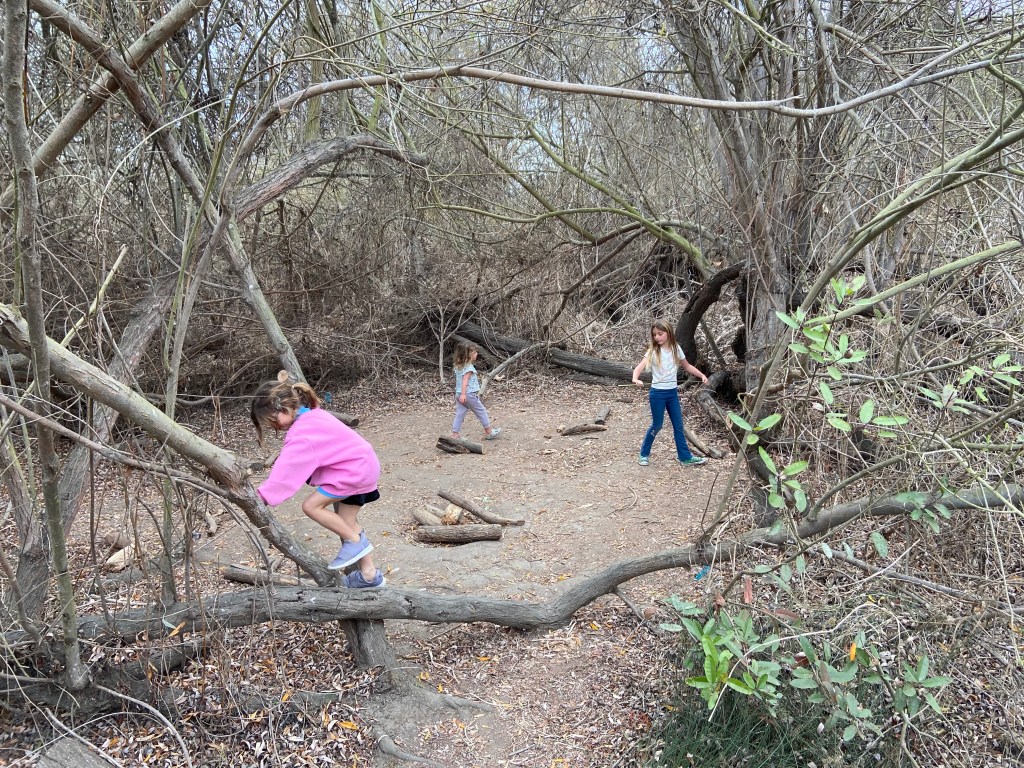
    I get a fresh burst of energy when I see our tree fort ahead. My arms reach up to the branches and my feet follow. The leaves shake as I shimmy up and land in the “y” shaped groove of the trunk. Stumps below are set in a fire circle and I whip up my famous tacos – watercress leaves on bark with berries for a pop of color. 

    Mom gets up and wipes the dirt off of her pants. 

    “No, we just got here!” I yell. I wish we could stay all day. 

  • Eco Art : Nature’s Treasures

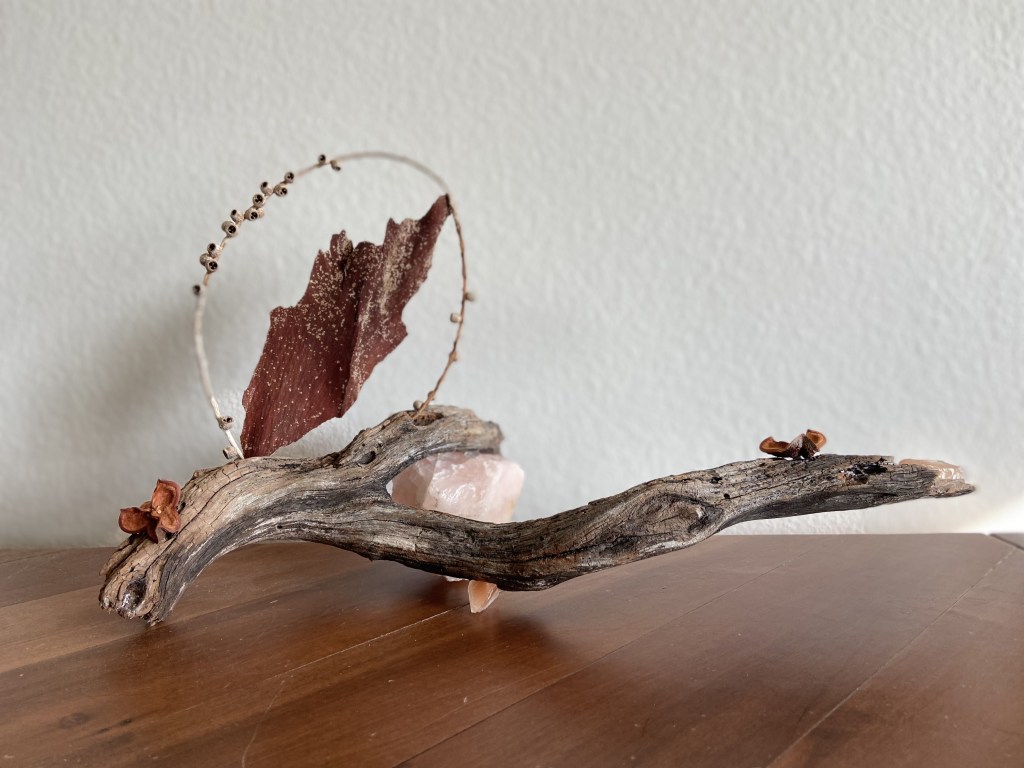
    Below are several sculptures created using respectfully collected natural materials including sticks, bark and seed pods (plus the addition of crystals and rocks for added stability). Thank you to Lia Strell for the soulful guidance and creative freedom.

  • A Trip in Conversation


    “I don’t know anyone else who would do what you’re doing,” said my sister. “Yeah because they’re smart!” I replied. 

    “Bon courage!” texted my supportive friend, Annelise. 

    “Will you be traveling alone…just you?” asked the Virgin Airlines agent, unaware of the tears behind my eyes. 

    “Coffee or tea?” inquired the British flight attendant. What a luxury to be served. 

    “I’m moving home right now. I hated living in L.A.,” declared the 20-something girl in seat 46A. 

    “Platform two gets you to Stroud station,” helped the busy father with a stroller and two children. “I’ll follow you!” I announce, as we weave through the sea of people, the steel, and the light of Paddington station. 

    “I’ve been traveling for eight months now,” shared the nomad whose 50-pound pack jostled back and forth with the train.

    “Ah me too. I’m from Brooklyn! I was just walking this way for a cab to Painswick,” said the American serendipitously. 

    “Welcome to Hawkwood”, smiled the innkeeper. “Allow me to get you settled in.”

    “For dinner tonight, we have orzo pasta with freshly baked bread. A salad from the garden and a variety of cheeses,” announced the chef. My mouth watered. 

    “You will be able to say, ‘I am a writer’ at the end of this,” encouraged the former student. 

    “How are you getting on?” inquired Sarah with a compassionate smile. “Homesick for my daughters,” I cried honestly. 

    “I had so much to say in that moment, but nothing came out,” inspired the author about her motivation to write the book. 

    “Your words are more of a think piece, try inserting your external surroundings more,” critiqued the tutor. 

     “I don’t know if I can do this,” confessed my inner voice.

    “Be where your feet are,” reminded my loving husband. 

    “All paths in England lead to somewhere, we just don’t always know where,” said Gail as our vinyl pants swished back and forth along the damp, sodden path. 

    “I think you are so brave for being here,” said Elizabeth. (To me she was the brave one). 

    “Don’t listen to the voices that tell you you’re crap. They’re not your friends – we’re your friends,” encouraged Jon at the precipice of a new adventure. 

    “Can I help you with your suitcase?” offered the attendant as we stepped under the white scalloped lattice onto the train back to London Paddington. 

    “Heathrow airport is the worst. You have to remove all your toiletries,” scoffed the irritated traveler in the TSA line, also from San Diego. I didn’t mind. 

    Nothing was said, as we all huddled around the phone-charging station like a soulless campfire, the scent of duty-free luxury still burning my nostrils, and the booming announcements nagging at my eardrums. 

    “I’ve never walked across a Canadian lake before” the slight, older gentleman joked as he shimmied past me on the narrow aisle, alluding to the flight tracker on his tiny screen. “I can barely feel my feet!”. I smiled and laughed, my body too reaching and lunging into unknown spaces.

    “I did it”, I texted my therapist quietly, not to alarm the foreboding joy. My eyes caught a glimpse of the crescent moon against the night sky out of the porthole window.

    “Welcome home! We missed you Mommy!” read my daughters’ signs as I emerged from the fluorescent arrivals tunnel out of LAX.